
Continuous KYC: Why a One-Time Check Is No Longer Enough
The person who passed your sanctions check six months ago may look very different today. Their address changed. A court issued a judgment against them. They appeared on a new watchlist. Yet most compliance programs are built around a single moment: onboarding.
A customer submits their ID, passes a sanctions check, and the record goes into the archive. Job done. The problem is that your archive knows none of what has happened since, and neither do you.
- A customer’s risk profile can change significantly after onboarding, and static KYC files create blind spots.
- Regulators increasingly expect ongoing due diligence, not just point-in-time verification.
- Continuous KYC reduces both compliance risk and the operational cost of periodic re-verification cycles.
- Owning your own data infrastructure, rather than buying signals through intermediaries, makes real-time monitoring cost-effective at scale.
What Changes After Onboarding, and Why It Matters
Identity is not static. A customer who was low-risk at signup can become high-risk within weeks. Someone acquires PEP status overnight when a family member takes public office. A previously clean individual can appear on a sanctions list following geopolitical shifts, and both the OFAC and EU lists saw significant additions after 2022 events in Eastern Europe. A registered address can change without the customer ever telling you.
For gambling operators, this is acutely relevant. The Dutch Kansspelautoriteit (KSA) expects operators to keep an accurate, current picture of their players, not just a snapshot from account creation. For staffing agencies placing contractors in sensitive roles, a criminal record issued after the initial VOG check is a real liability. And for marketplaces facilitating high-value transactions, a seller who passes onboarding but later faces enforcement action becomes both a regulatory and a reputational exposure.
The gap between “verified at onboarding” and “currently verified” is where most compliance failures live. Our breakdown of how identity data drives financial crime prevention shows exactly what that gap costs a firm that leaves it unaddressed.

What Regulators Actually Expect
The Fifth and Sixth Anti-Money Laundering Directives (5AMLD and 6AMLD) require firms to apply ongoing due diligence to business relationships. The Dutch Wwft (Wet ter voorkoming van witwassen en financieren van terrorisme) is explicit: firms must monitor continuously and keep customer information up to date. That phrase, “up to date”, is doing a lot of work.
In practice, many firms interpret this as periodic re-screening: annually for standard-risk customers, quarterly or monthly for higher-risk ones. That’s a reasonable starting point, but it still leaves windows. A sanctions designation issued on day 47 of a 90-day re-screening cycle sits in your portfolio undetected for 43 days. That’s 43 days of potential liability.
True continuous monitoring means checking against updated lists as they change, not on a calendar schedule. You receive a signal when a customer’s data shifts, instead of discovering it on the next scheduled review. Dutch financial regulators and the KSA are both moving toward this expectation, even if formal guidance still permits periodic approaches for lower-risk tiers. Getting ahead of that curve now is a structural advantage, not just a compliance tick.
The Three Triggers That Should Always Prompt a Re-Check
- Watchlist and PEP changes: Any update to OFAC, EU, UN, or domestic Dutch sanction lists that touches a current customer profile.
- Address or identity data change: A customer updating their registered address, name, or document, which should trigger re-verification rather than simple data replacement.
- Behavioural threshold breach: Transaction volumes or patterns that exceed the risk profile established at onboarding.
The Operational Reality: Why Most Teams Fall Behind
Knowing that continuous KYC matters and actually doing it are two different things. Most compliance teams we speak with are already stretched. Staff run re-verification cycles by hand, documentation sits scattered across systems, and every time a regulation changes, someone has to rebuild the workflow from scratch.
The cost of this is real. An analyst spending two hours manually re-verifying a customer who turns out to be low-risk is a direct hit to your operating budget. Multiply that across hundreds of customers per quarter and you’re looking at a meaningful line item, before you’ve even priced in what it means to miss something. Our thinking on why KYC compliance costs more than it should goes deeper on this specific problem.
The answer isn’t hiring more analysts. It’s building infrastructure that surfaces the right signals automatically, so your team responds to flags rather than generating them through manual sweeps.
How Continuous Identity Monitoring Works in Practice
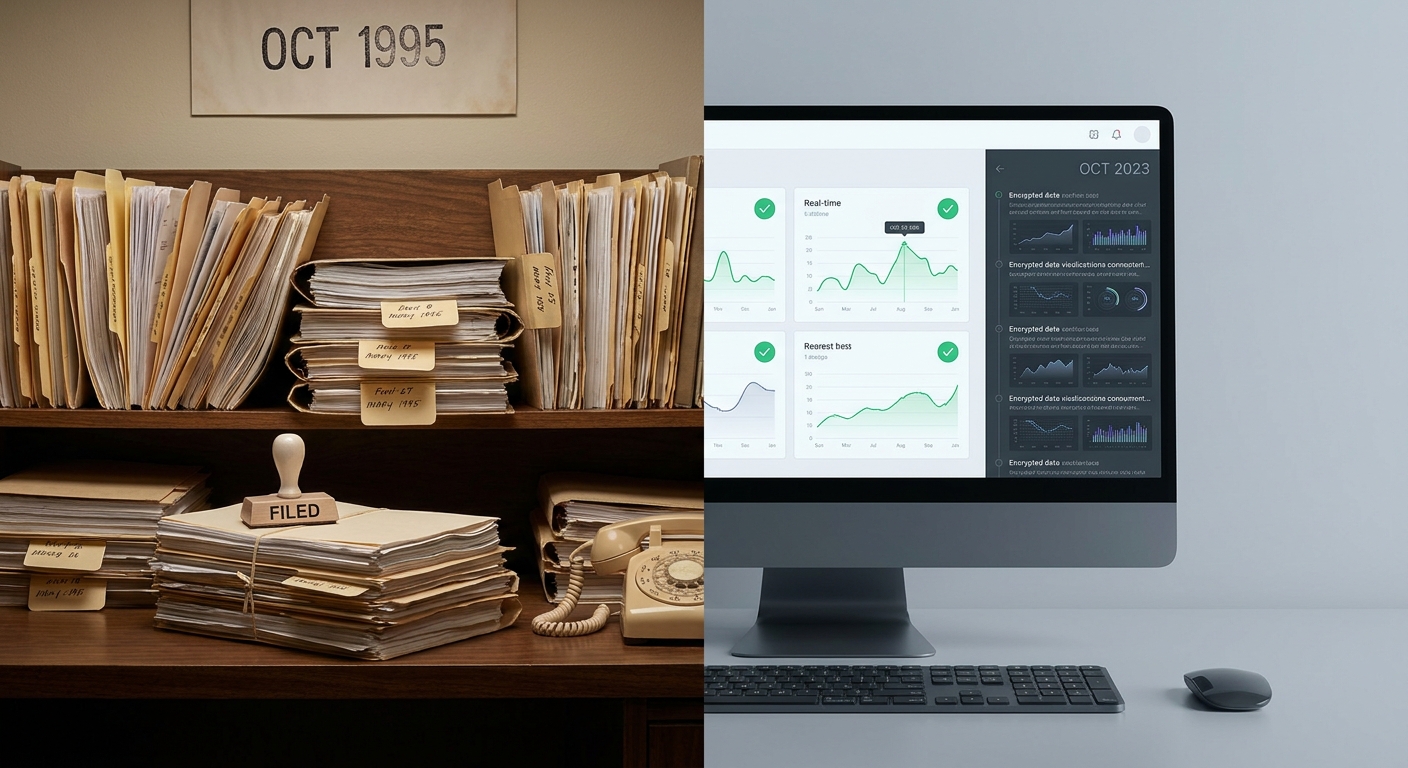
At Strike Group, our approach to continuous identity monitoring is built on the premise that customer records should be live, not archived. Rather than pulling a snapshot at onboarding and reviewing it periodically, the system watches the underlying sources, including identity registries, watchlists, and sanctions databases, and generates a signal the moment something changes.
The important distinction here is how information flows. We own our own data infrastructure. We don’t purchase signals through intermediaries, which means no markup, no latency from a third-party pipeline, and no ambiguity about where anything came from. When a match occurs, you see the source directly. That transparency matters when you’re building a regulatory file.
For Dutch operators specifically, this means watching domestic sources like the BRP, court records, and KVK alongside international watchlists. Our guide to identity verification for regulated markets covers this in more detail, including how we handle multi-country requirements via a single integration.
What Good Monitoring Infrastructure Looks Like
- Changes in sanctions or PEP status trigger an alert within hours of the list update, not at the next scheduled review.
- Identity changes to an address, document expiry, or name feed back into the customer profile automatically.
- The system generates audit trails in real time, so your regulatory file stays current rather than reconstructed after the fact.
- Risk tier adjustments happen based on live signals, turning the binary onboarding/offboarding decision into a graduated, evidence-based process.
Comparing Continuous KYC Approaches
| Approach | Re-screening Frequency | Regulatory Gap Risk | Operational Cost |
|---|---|---|---|
| Manual periodic review | Annual / quarterly | High, weeks or months of exposure | High, analyst time per customer |
| Automated batch screening | Weekly / monthly | Medium, days to weeks of exposure | Medium, infrastructure plus review |
| Event-driven continuous monitoring | Real-time on data change | Low, hours at most | Low, alerts only on change |
Frequently Asked Questions
Is continuous KYC required by Dutch law?
The Wwft requires ongoing monitoring and up-to-date customer information, but doesn’t mandate a specific technical implementation. Regulators currently accept periodic re-screening for lower-risk customers. That said, real-time monitoring is increasingly the standard they point to when assessing whether a firm’s programme is adequate.
How does continuous KYC differ from transaction monitoring?
Transaction monitoring watches for suspicious activity patterns in financial flows. Continuous KYC watches the identity and status of the customer: their PEP status, sanctions exposure, and data accuracy. Both are required; they address different risks and should run in parallel, not as substitutes.
What happens when a match is found during ongoing monitoring?
A well-designed system generates a prioritised alert with the source of the match, the specific field that changed, and the customer record. Your compliance team reviews the alert and decides the response, which might be additional due diligence, account restriction, or filing a suspicious transaction report (STR) with FIU-Nederland.
Does continuous monitoring mean data leaves our systems?
It depends entirely on the infrastructure. In our case, validation happens without exporting customer records. We check status against the sources directly, so your customer data doesn’t transit through a third-party network. That’s a meaningful distinction for organisations with strict data residency requirements or GDPR obligations.
How quickly can we move from periodic to continuous monitoring?
For most organisations already using API-based KYC tools, the transition is primarily a configuration and workflow change rather than a full integration project. The bigger shift is internal: retraining compliance teams to work from alert queues rather than batch review lists. That cultural shift takes longer than the technical one.
The question worth sitting with is this: if a regulator asked you right now to show them your current picture of every customer’s risk profile, not last quarter’s and not last year’s, how confident would you be in what you handed them?
Next step: read what to look for in KYC software before you shortlist vendors.