Fraud Detection in Identity Systems: A Practical Guide for Regulated Businesses
Last Tuesday, your onboarding flow approved someone who should never have passed. You won’t find out until your next audit, or until a regulator tells you first. The gap between the moment a fraudulent identity enters your system and the moment you catch it is where fraud detection either earns its keep or quietly costs you a fine. This guide covers how identity fraud detection works in practice: the technologies involved, how the main platforms compare on cost and coverage, and what a solid implementation looks like once it goes live.
Key Takeaways
- Identity fraud is not a single attack type. It spans synthetic identities, document forgery, account takeover and impersonation, each requiring different detection methods.
- AI and machine learning have shifted fraud detection from reactive rule-sets to predictive, behavioural models that catch anomalies in real time.
- Biometric verification, particularly liveness detection, is now a baseline expectation in regulated onboarding, not a premium feature.
- One-time KYC checks are insufficient. Continuous monitoring is what keeps your customer data accurate and your risk exposure manageable after onboarding.
- Platform choice matters more than most operators realise. Cost structure, data ownership and configurability vary enormously between vendors.
What Identity Fraud Actually Is — and Why Detection Is Getting Harder
Identity fraud occurs when someone uses false, stolen or fabricated identity information to gain access to a service, account or financial product they would not otherwise qualify for. The definition sounds simple. The problem is anything but.
The scale is significant. According to Javelin Strategy & Research, identity fraud cost consumers and businesses over $43 billion in the United States alone in 2023. In the Netherlands and broader EU, the growth of digital onboarding since 2020 has expanded the attack surface considerably, particularly in sectors like online gambling, staffing and financial services, where identity verification is a legal requirement.
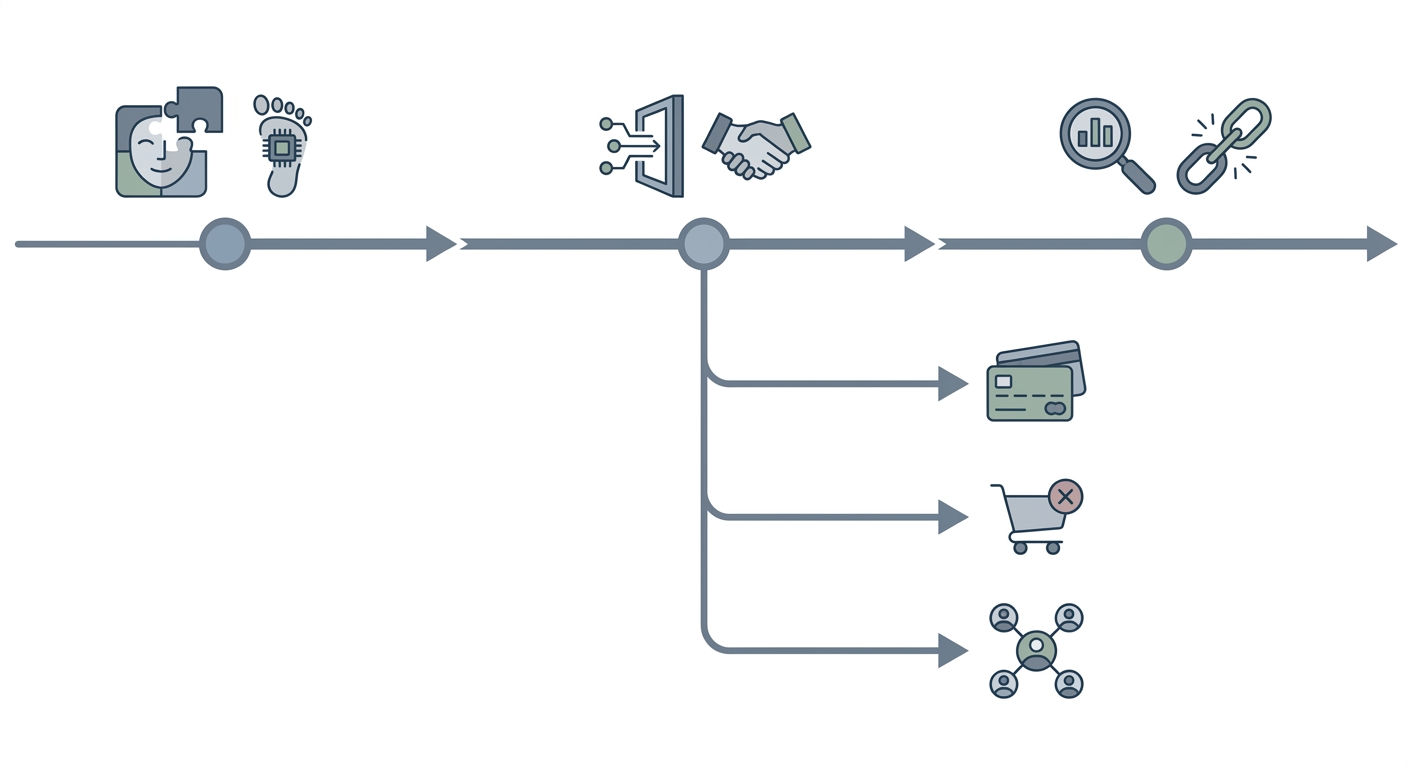
What makes detection genuinely difficult is that fraudsters are not static. They adapt to whichever controls are weakest. When document checks became standard, synthetic identity fraud rose, combining real data fragments with fabricated ones to create identities that pass basic checks. When liveness detection became common, deepfake injection attacks followed. Every improvement in verification technology is met, eventually, with a corresponding evasion technique.
The Main Types of Identity Fraud Your System Needs to Handle
Not all identity fraud looks the same, and conflating them leads to gaps in your detection architecture. Here are the attack types that matter most for B2B operators in regulated markets.
Synthetic Identity Fraud
A fraudster combines a real BSN (or equivalent national ID number) with fabricated name, address and date-of-birth data. The resulting identity has a partial real-data footprint, which allows it to pass checks that rely on single-source database lookups. It is the fastest-growing type of identity fraud in Europe. Detection requires cross-referencing multiple independent data sources simultaneously rather than verifying each data point in isolation.
Document Fraud
Forged, altered or stolen physical or digital identity documents. Modern document fraud ranges from low-effort photo edits to sophisticated template forgeries that mimic security features convincingly enough to fool automated optical character recognition. Counter-measures include chip reading for NFC-enabled cards, UV pattern checks and AI-trained authenticity models.
Account Takeover (ATO)
Someone other than the real owner accesses a legitimate account, typically via credential theft, phishing or SIM swapping. ATO is less about onboarding fraud and more about ongoing access, which is why it is a strong argument for continuous identity monitoring rather than point-in-time verification.
Impersonation and Mule Accounts
A real person uses their own documents but acts on behalf of a criminal network, as a money mule, for example. This is among the hardest fraud types to detect at onboarding because the identity itself is legitimate. Behavioural analytics and transaction pattern monitoring are the primary tools here.
Technologies Used in Identity Fraud Detection
The technology stack for fraud detection in identity systems has expanded rapidly over the past five years. Knowing what each layer does helps you evaluate whether a platform is genuinely comprehensive or just well-marketed.
Document Verification
Automated extraction and validation of data from identity documents such as passports, driving licences and national ID cards. This includes OCR for data extraction, image analysis for tampering indicators and, for chip-enabled cards, NFC reading to verify the cryptographic signature embedded by the issuing authority.
Biometric Verification and Liveness Detection
Facial biometrics match a selfie against the photo on the submitted document. Passive liveness detection confirms the selfie captures a real, present person rather than a photograph or digital injection. Active checks, where the user performs a gesture, add a further layer but introduce friction. The current industry direction is toward passive methods, which are less obtrusive and increasingly accurate.
Database Verification
Cross-referencing submitted identity data against authoritative sources: government registries, credit bureaus, telco data and sector-specific databases. The quality and independence of these sources is what separates thorough verification from shallow lookups. Our UK identity and telco data verification capability illustrates what multi-source, country-specific checking actually looks like in practice.
AML and Sanctions Screening
Checking names and identity data against sanctions lists (EU, OFAC, UN), politically exposed persons (PEP) databases and adverse media sources. This is a regulatory requirement in most sectors, not an optional add-on. The challenge is managing false positive rates. Overly broad screening creates compliance backlogs without improving risk outcomes.
Behavioural Analytics
Analysing how a user interacts with an onboarding flow or platform over time. Patterns like unusually fast form completion, device fingerprinting anomalies or session behaviour that diverges from a user’s historical norm can flag fraudulent access even when the identity credentials are technically valid.
How AI and Machine Learning Have Changed Identity Fraud Detection
Rule-based fraud detection had a fundamental flaw: it only caught what you already knew to look for. If you blocked accounts from a specific IP range, fraudsters simply used a different one. The rules became a roadmap for evasion.
Machine learning trained on large, diverse datasets can detect patterns that no human analyst would think to encode by hand. Anomaly detection flags identity submissions that differ statistically from legitimate ones, without needing anyone to define every possible fraud scenario in advance. That shift from reactive rules to prediction is the genuine step-change AI has brought to this field.
Systems that work well combine both approaches, and there is a reason for pairing them. ML surfaces anomalies and assigns risk scores. Rule-based logic applies regulatory requirements that cannot be bent: sanctions screening, for example, is binary regardless of what a score says. The art is in the orchestration layer that decides which checks run, in what order, and what happens when one returns an uncertain result.
Top Identity Fraud Detection Platforms Compared
The market for identity fraud detection platforms is crowded, and vendor claims tend to converge on the same language. The differences that actually matter for regulated businesses come down to data ownership, configurability and total cost of ownership.
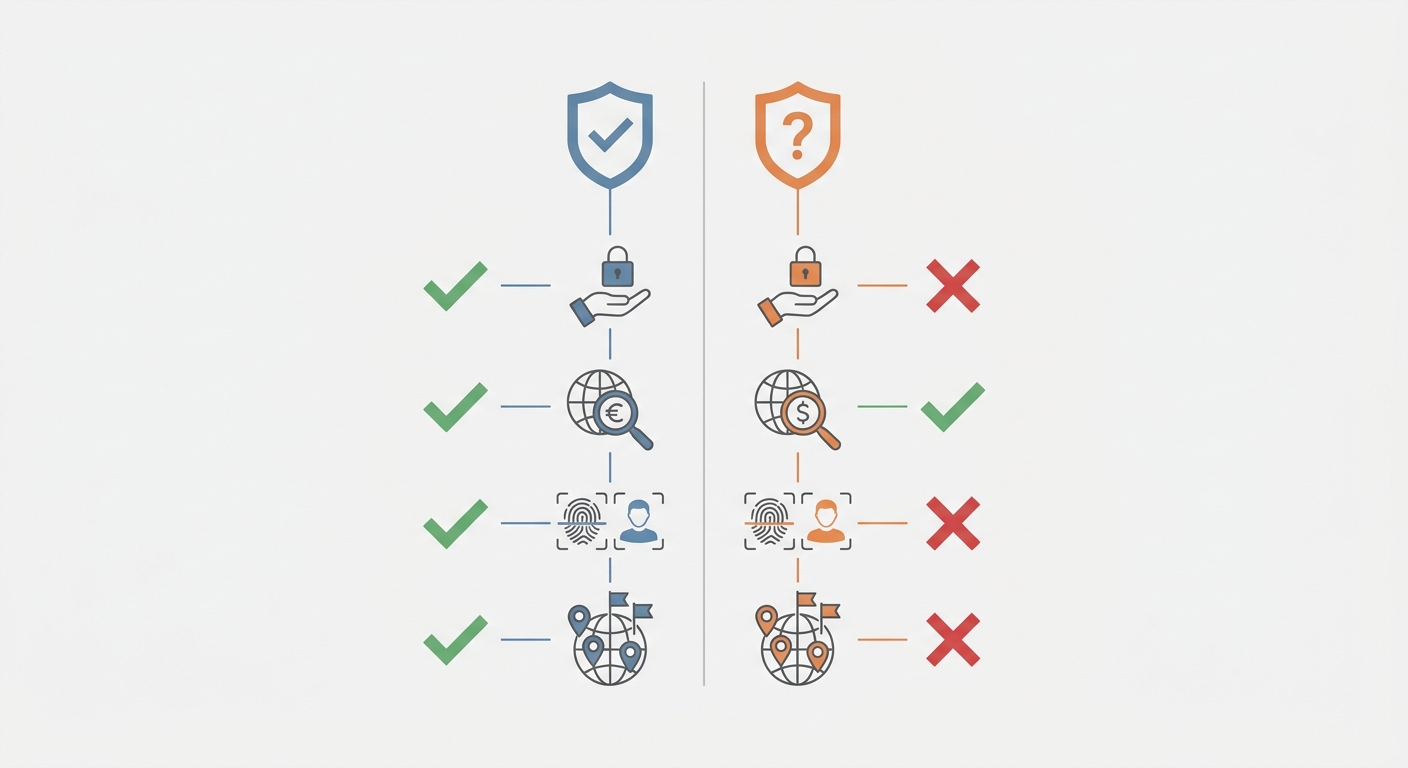
| Feature | Strike Group | Sumsub |
|---|---|---|
| Data ownership | We own our own data infrastructure, no third-party reselling | Aggregates data from third-party providers |
| Pricing model | Cost-price, because we source our own data | Margin applied on top of third-party data costs |
| KYC flow configurability | Fully configurable per market, risk level and regulator requirement via VerifyMe | Configurable, though workflow depth varies by plan |
| AML and sanctions screening | Included in VerifyMe onboarding flow | Available, typically as an add-on module |
| Collaborative validation | Global Sphere network, status-only, no data export | Not available |
| Multi-country coverage | 32+ markets via SDS platform, single integration | Wide coverage, but integration complexity increases with geography |
| Data residency / export | No record exchange, validation status only | Data processed through Sumsub infrastructure |
| Dutch regulatory knowledge | Built in the Netherlands, updated per local rule changes | Global platform, local nuance requires configuration |
The data ownership point deserves more attention than it typically gets. Most providers sit between you and the underlying sources, adding a margin at every layer. When a vendor owns the data itself, the cost structure is fundamentally different, and that difference compounds at scale. We built Strike Group’s infrastructure around owned data precisely because we saw how much of the compliance budget in regulated industries was flowing to intermediaries rather than to actual verification quality. For a longer look at where those costs accumulate, our analysis of why KYC compliance costs more than it should is worth reading before your next vendor renewal conversation.
Implementing Identity Fraud Detection: What the Process Actually Looks Like
Most implementation guides treat this as a purely technical exercise. It is not. The decisions made during setup have direct compliance implications, and getting the sequence wrong creates problems that are expensive to unpick later.
Step 1 — Map your risk exposure by customer segment
Before choosing checks, understand what you’re protecting against. A Dutch gambling operator faces different fraud vectors than a staffing agency or a charity. Your risk assessment should identify which fraud types are most likely for your specific customer base and which regulatory requirements are non-negotiable. The checks follow from this, not the other way around.
Step 2 — Define your verification logic per risk tier
Not every customer carries the same risk. A configurable KYC flow lets you apply proportionate checks: lighter-touch verification for lower-risk profiles, enhanced due diligence for higher-risk ones. Regulatory frameworks like the Dutch Wwft (Wet ter voorkoming van witwassen en financieren van terrorisme) explicitly require a risk-based approach. Build that into the decision logic from day one, with transparent audit trails for each decision.
Step 3 — Integrate your data sources
Choose verification sources that are authoritative for your markets. For identity data, this means government registries, credit reference agencies and, where relevant, telco data. For AML, it means real-time sanctions and PEP list feeds. If your sector shares fraud risk, consider collaborative validation networks that share status without exchanging records. Our Global Sphere network operates exactly this way.
Step 4 — Configure your fallback and remediation flows
What happens when a check fails, or returns a result too ambiguous to act on? Every possible outcome needs a defined next step. This is where most implementations underinvest. A clear remediation path, including what the customer sees, what the compliance team sees and what goes into the regulatory dossier, is not an afterthought. It is core to the system working as intended.
Step 5 — Move from one-time verification to continuous monitoring
Onboarding is the start of the identity relationship, not the end. PEP status changes. Sanctions lists update. Addresses change without notification. A customer who was clean at onboarding may not be clean twelve months later. Continuous identity monitoring is what closes that gap, and regulators are increasingly treating it as an expectation, not an optional enhancement. Our deeper look at why one-time KYC checks are no longer sufficient covers the compliance case in full.
Compliance and Best Practices: What Regulators Actually Expect
Dutch and EU authorities are not primarily concerned with which platform you use. They want to see that your verification process is proportionate to your risk, documented transparently, applied consistently and reviewed when regulations change. That translates into a small number of practical requirements.
Your decision logic must be auditable. If a regulator asks why a particular customer passed or failed a check, you need a clear, documented answer, not a black-box risk score. This is one reason we built transparent decision logic into VerifyMe: the system produces the regulatory dossier as part of the verification process, rather than reconstructing it afterwards.
Your screening lists must be current. Sanctions regimes change, sometimes daily. A static list integration that updates weekly is a compliance gap. Real-time or near-real-time feeds are the standard expectation.
Your process must adapt to regulatory change. The Dutch environment moves faster than most operators expect. Lawmakers have amended the Wwft multiple times in recent years, and sector-specific guidance from the Kansspelautoriteit (KSA) for gambling operators continues to evolve. A verification system that requires a full technical redevelopment every time a rule changes is a liability. Configurability at the product level, not just at the API level, is what makes compliance sustainable. You can see how this applies specifically to staffing agencies in our breakdown of what Dutch labour market rules actually require for KYC.
Frequently Asked Questions About Identity Fraud Detection
What is the difference between identity verification and identity fraud detection?
Identity verification confirms that a person is who they claim to be, typically by checking documents and cross-referencing data sources. Identity fraud detection is broader. It encompasses the processes, technologies and monitoring that identify fraudulent activity both at onboarding and throughout the customer lifecycle. Verification is a step within fraud detection, not a synonym for it.
How do synthetic identities pass standard verification checks?
A synthetic identity pairs a real national ID number with fabricated supporting details. Single-source lookups that only validate the number return a positive result, because the number itself is genuine. Catching the fraud means cross-referencing several independent sources at once. If the name attached to an ID number in one database does not match the name in another, that inconsistency is a signal.
Is liveness detection sufficient to prevent deepfake fraud?
Passive liveness detection has become more resistant to video injection attacks as the technology has matured, but it is not a silver bullet. The strongest defence combines liveness detection with document NFC chip verification (which cannot be spoofed with a deepfake) and database cross-referencing. No single technology is sufficient on its own.
How often should customer identity data be re-verified?
This depends on your risk tier and sector. For high-risk customers, those flagged as PEP, those with complex ownership structures or those in high-value transaction segments, ongoing monitoring should be near-continuous, with real-time alerts on sanctions list changes. For lower-risk customers, periodic checks (annually or triggered by material account changes) are typically appropriate. The Wwft requires a risk-based approach, which means the frequency should be documented and defensible.
What data does collaborative identity validation share between participants?
In our Global Sphere network, no personal records are exchanged between participants. Each member keeps their own data. The only information shared is a validation status, essentially a yes or no against a query. This means participants get the benefit of community validation without any of the data residency or GDPR exposure that record-sharing would create.
How does fraud detection in identity systems differ between sectors?
The underlying technologies are largely the same, but the risk profile, regulatory requirements and fraud vectors differ significantly. Online gambling operators face high volumes of anonymous onboarding attempts with significant bonus abuse risk. Staffing agencies deal with document fraud related to right-to-work checks. Marketplaces face account takeover and mule account risks. Charities face exploitation of lower-scrutiny onboarding. The configuration of your fraud detection system should reflect those sector-specific realities, not apply a generic template.
The Question Worth Sitting With Before Your Next Vendor Decision
Most regulated businesses evaluate fraud detection platforms on feature lists and price. Both matter. But the question that tends to surface too late is this: when the regulation changes next quarter, and in the Netherlands, it will, how much of the implementation work sits with your vendor and how much sits with your team?
If the answer is mostly your team, the visible platform cost understates the true cost considerably. The businesses that handle regulatory change most efficiently are the ones whose verification logic is configurable at the product level, whose audit trails are built into the process rather than bolted on and whose vendors have direct knowledge of the local regulatory environment rather than treating every market as a generic deployment. That is the benchmark worth applying, before the next audit, not after.
For a fuller picture of what identity verification looks like across regulated markets, our overview of identity verification and data quality for regulated markets covers the landscape in practical terms.