
Why KYC Compliance Costs More Than It Should, and What to Do About It
- Most Dutch regulated organisations are paying a margin on top of data they could access directly.
- KYC costs scale with volume, but they don’t have to scale as steeply as most vendors make them.
- Continuous monitoring after onboarding is where compliance gaps and hidden costs compound fastest.
- Owning your data infrastructure, rather than renting it through intermediaries, is the structural fix.
- Transparent cost pricing is not just a procurement win. It’s a risk management argument.
If you’ve signed off on a KYC vendor contract in the last three years, there’s a reasonable chance you overpaid. The problem isn’t that you negotiated badly. The vendors design their pricing models to obscure what you’re actually buying. You’re paying a platform fee, a per-check fee, and often a data-sourcing margin that the vendor earns simply for being in the middle. The underlying data, from Dutch registries, document authorities, and sanction lists, is often accessible without the intermediary. The question is whether your infrastructure is built to reach it directly.
The Hidden Layer in Most KYC Vendor Pricing
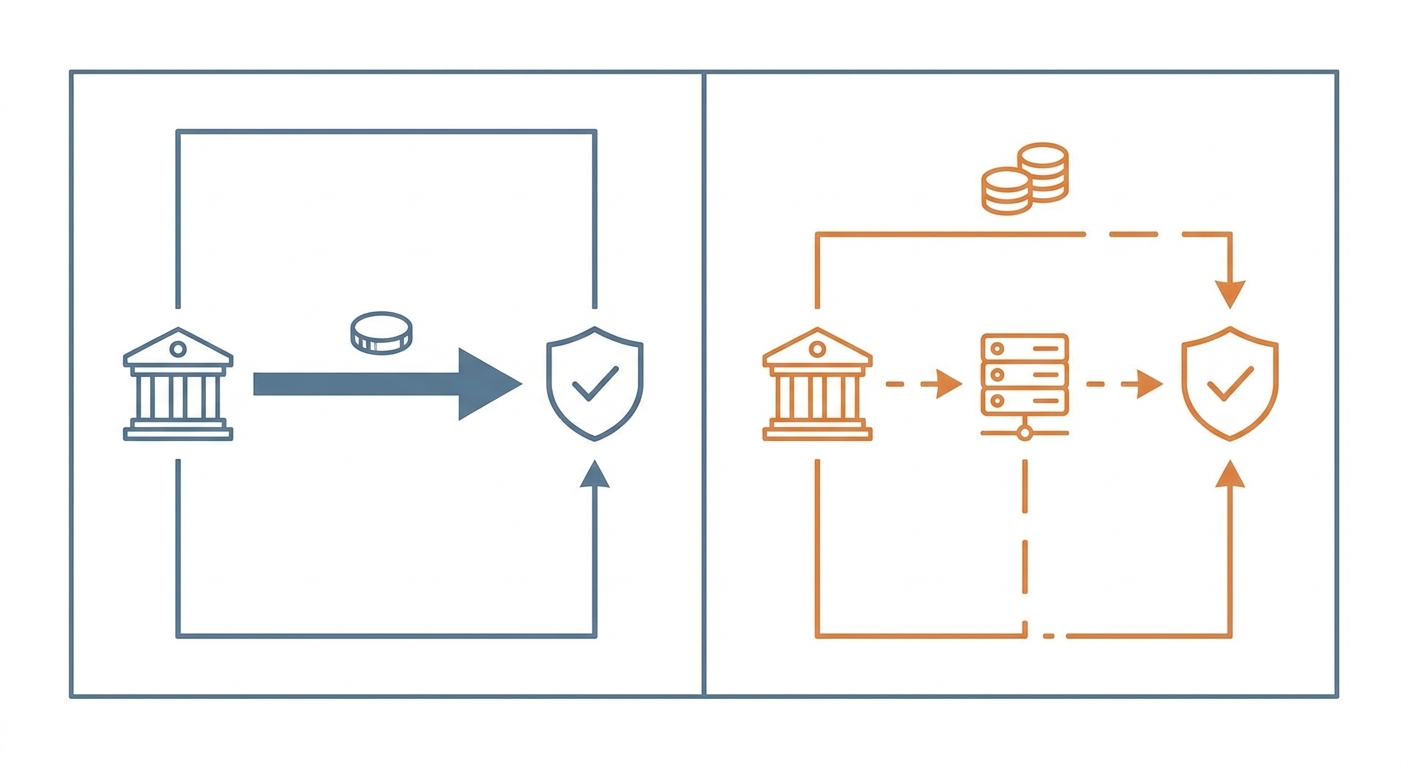
Most KYC platforms don’t own the data they sell you access to. They aggregate from primary sources, apply a markup, and present the result through a clean dashboard. That’s a legitimate business model, but it means your per-check cost includes a margin that has nothing to do with the quality of the verification itself. For a staffing agency running 10,000 checks a year, that margin compounds into a material budget line. For a gambling operator managing continuous monitoring across an active customer base, it can become one of the largest operational cost items in compliance.
What makes this harder to see is that most vendor contracts bundle the data cost into a platform fee structure. The line items don’t show you what you’re paying for the verification versus what you’re paying for the infrastructure versus what the vendor earns as a reseller. Our approach at Strike is different: because we own our own data, we price at cost. There’s no reseller margin sitting between you and the source. That’s not a marketing claim; it’s a structural consequence of how we built the stack. If you want to see how this works day to day, our guide to identity verification for regulated markets walks through the detail.
For a comparison of KYC software pricing models and total cost of ownership, see our selection guide.
Where Costs Actually Accumulate: Onboarding vs. Ongoing

Onboarding gets most of the attention because it’s visible. A new customer triggers a check, the check has a cost, and that cost appears somewhere in your procurement approval chain. Ongoing monitoring is less visible, which is exactly why it tends to be where costs and compliance gaps compound together.
Dutch gambling regulation, for example, doesn’t end at onboarding. The Ksa expects operators to maintain an up-to-date picture of their players: source of funds, PEP and sanctions status, any changes that would affect their risk classification. If your vendor charges per re-check, and your customer base is large, the ongoing monitoring cost can exceed your onboarding cost within 18 months. If your vendor doesn’t offer continuous monitoring at all, you’re carrying the regulatory exposure yourself.
The same logic applies to staffing agencies managing large contractor pools, or marketplaces where seller and buyer identities need to remain current. Continuous identity monitoring isn’t an add-on feature. It’s where the real compliance work happens after onboarding is done.
What ‘Owning Your Data’ Actually Means for a CFO
When we say we own our data, we mean that Strike connects directly to primary sources (Dutch registries, document authorities, international sanction databases) without passing through an aggregator who adds margin. The practical consequence for a CFO is straightforward: cost predictability. You know what each check costs because there’s no variable reseller layer inflating it based on market conditions or contract terms with a third party you never negotiated with.
There’s a risk dimension here too. Every intermediary in a data chain is a potential point of failure, a potential exposure, and a potential compliance complication if that intermediary’s own practices come under regulatory scrutiny. Fewer intermediaries means fewer things that can go wrong between the source and your compliance record. Our data stack runs on this principle: direct access, no export, validation at source.
KYC Vendor Comparison: What to Look for Beyond Price
| Capability | Intermediary Platforms | Strike |
|---|---|---|
| Data ownership | Aggregated from third parties | Owned directly |
| Pricing model | Platform fee + per-check + data margin | Cost price, no reseller markup |
| Continuous monitoring | Often an add-on or absent | Built into the lifecycle model |
| Dutch regulatory fit | Generic, may lag local rule changes | Built in NL, updated with regulation |
| Data residency | Often exported to vendor infrastructure | No data export; validated at source |
| International coverage | Varies by vendor | 32+ markets via single integration |
Price matters, but it’s only one dimension. A vendor that prices low but doesn’t keep up with Dutch regulatory changes (and those rules change, consistently and without much notice) can create a compliance gap that costs more than any saved per-check margin. We configure our VerifyMe product per market and per risk level precisely because the rules in Dutch gambling, for instance, differ from the rules in Dutch staffing. The decision logic, the step sequence, and the audit trail for the supervisor all need to reflect the specific regulation, not a generic template. You can see how AML and KYC identity data drives practical compliance decisions in regulated environments.
One Structural Change That Reduces Both Cost and Regulatory Exposure
If you’re a COO or CCO, start by mapping your full identity verification cost: not just onboarding, but re-verification, ongoing monitoring, manual review triggered by failed checks, and the internal hours spent managing vendor relationships. Most organisations that do this exercise find the true cost is significantly higher than the line item on their vendor invoice.
Once you have that number, the question becomes structural: are you paying that cost because of how the market works, or because of how your infrastructure is built? If your vendor is an intermediary who resells access to data you could reach directly, the answer is the latter. That’s a solvable problem, and it doesn’t require a painful migration. It requires the right API integration and a vendor who’s willing to show you the cost breakdown transparently.
Frequently Asked Questions
What makes KYC costs unpredictable for regulated Dutch organisations?
Most of the unpredictability comes from per-check pricing that scales with volume combined with reseller margins that fluctuate with the vendor’s own data sourcing costs. Add in the per-check cost for re-verifications and ongoing monitoring, and the total spend is often two to three times the onboarding cost alone. Organisations that don’t model the full lifecycle cost routinely underestimate their annual KYC spend by 40–60%.
Is it realistic for a mid-sized operator to move away from an intermediary KYC platform?
Yes, though the timeline varies. What decides it is whether your new vendor can integrate without requiring you to export or migrate historical verification records. A well-designed API integration, like the one we offer, means you can switch data infrastructure without losing your compliance audit trail. For most mid-sized operators, a parallel run over 60–90 days is enough to validate accuracy and operational continuity before full transition.
How does Dutch-specific KYC regulation differ from generic European standards?
The Wwft and Ksa guidelines introduce specifics that pan-European frameworks don’t always address, particularly around gambling. Here, Dutch supervisory guidance governs player risk classification, source of funds checks, and monitoring frequency, and it updates independently of EU directives. A generic KYC platform built for broad European compliance may lag these updates by months, which is a meaningful exposure when the Ksa is actively enforcing.
What’s the difference between identity verification and KYC?
Identity verification confirms that a person is who they say they are. Typically it matches a document against a live face or a registry record. KYC (Know Your Customer) is broader: it includes verification, but also risk classification, AML screening, PEP and sanctions checks, and ongoing monitoring. Treating the two as the same thing is one of the most common compliance gaps we see in Dutch regulated organisations.
Can continuous monitoring be automated, or does it require manual review?
You can and should automate most of it: status changes in registries, new sanctions list entries, PEP status updates. But deciding what to do with a changed status often involves a human review step. The goal is to reduce the manual review burden to only the cases that genuinely require judgment, rather than running manual sweeps across your entire customer base. Automation handles the detection; your compliance team handles the decision.